

A salon owner in Bangalore signs up for Hootsuite because every "best social media tool" list says so. Two weeks in, she's paying $99 a month for one seat and ten accounts, and she still has to write every caption, design every post, and shoot every photo herself. The scheduler works fine. It just never had anything to schedule.
That's the quiet problem with most searches for a hootsuite alternative: the tool people are switching away from was never the bottleneck. Hootsuite and Buffer post things on time. Neither one makes the thing you're supposed to post. For a small team without a designer, a photographer, or a content person on staff, that gap is the whole job.
This post breaks down what Hootsuite and Buffer actually cost right now, where each one is genuinely good, and why a growing number of small Indian businesses are looking past scheduling tools entirely toward something that creates content, not just queues it.
What Hootsuite actually costs in 2026
Hootsuite prices per user, per month, and the jump between tiers is steep. Straight from Hootsuite's own pricing page (hootsuite.com/plans):
- Standard: $99/user/month (billed annually), up to 10 social accounts, AI post and image generation, one unified inbox, basic brand monitoring.
- Professional: $199/user/month (billed annually), unlimited accounts, automated inbox replies and workflows, 90-day trend forecasting, custom reports.
- Advanced: $399/user/month (billed annually), everything in Professional plus content approval workflows, message auto-routing to team members, team performance metrics.
- Enterprise: custom pricing, SSO, custom compliance, unlimited seats.
Two things stand out for a small team. First, it's per-user. A boutique with an owner and one part-time social hire on the Standard plan pays $198/month before any add-ons, before tax, before the annual-billing discount even factors in monthly billing (which costs more). Second, the entry plan caps you at 10 accounts, which sounds like plenty until you count Instagram, Facebook, a second Instagram for a sister brand, WhatsApp Business, and Google Business Profile.
None of this is a knock on Hootsuite. It's a genuinely deep platform, built for teams that need inbox management, compliance, and multi-brand reporting at scale. A marketing team running social for a national retail chain, with a support inbox, a legal review step, and a dozen regional pages, gets real value out of Professional or Advanced. The mismatch is size: a nine-person salon chain in Jaipur doesn't need trend forecasting and custom compliance solutions. It needs its Instagram to stop going quiet for two weeks at a time, and it's paying enterprise-shaped pricing for a problem that isn't enterprise-shaped.
There's also the seat maths to think through before signing up. Hootsuite's price is quoted per user, so adding a second person to help with community replies doesn't just add a task, it doubles the bill. A two-person team on Standard, billed annually, runs $2,376/year before tax. That's before add-on seats, before upgrading a single tier for more accounts, and before any of the AI image generation or automation features are actually used often enough to justify the jump to Professional.
What Buffer actually costs in 2026
Buffer prices per connected channel instead of per user, which changes the maths in a different direction. From Buffer's official pricing page (buffer.com/pricing):
- Free: $0, up to 3 channels, 10 scheduled posts per channel, one user.
- Essentials: $5/channel/month billed annually ($6/month billed monthly), unlimited scheduled posts, advanced analytics, hashtag manager, one user.
- Team: $10/channel/month billed annually ($12/month billed monthly), everything in Essentials plus unlimited team members, approval workflows, custom permissions, branded reports.
Buffer's per-channel model is friendlier to a solo owner running two or three accounts: a boutique on Instagram and Facebook only pays for two channels, roughly $10-12/month on Essentials. It gets expensive the moment a business runs several brand accounts or wants more than one person posting. A seller who manages five Meesho-adjacent Instagram pages under different sub-brands, plus a Facebook page each, is looking at $50+/month on Essentials alone, and needs Team ($100/month at 10 channels) the second a second person needs login access.
Buffer's design is clean and it does scheduling and basic analytics well. Like Hootsuite, it is a queue. It has an AI Assistant for draft text, but nothing that turns a product photo into a finished Reel or a model-worn shot. You still need images before you need a scheduler.
Buffer's per-channel pricing also means the bill scales with growth in a way that's easy to underestimate. A manufacturer in Surat running separate Instagram pages for a wholesale brand and a retail-facing brand, plus a Facebook page for each, is already at four channels before adding a single teammate. Cross into Team tier for a second person to help with replies, and the per-channel rate jumps from $5 to $10, doubling the bill on the same four accounts. None of that spend touches the actual bottleneck, which is that someone still has to produce four channels' worth of fresh photos every week.
Hootsuite vs Buffer vs Scalio: the real comparison
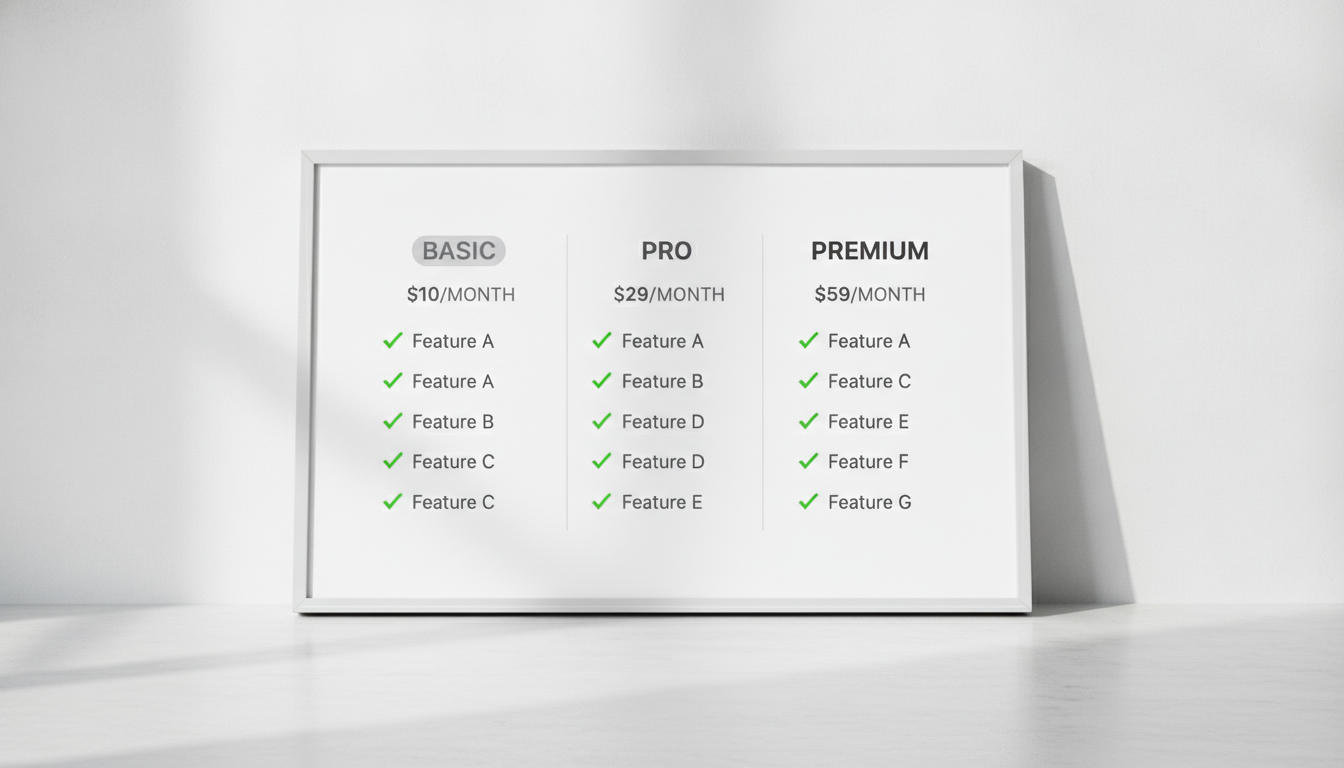
Here's the side-by-side that actually matters for a small business deciding where to spend money next month.
| Hootsuite | Buffer | Scalio | |
|---|---|---|---|
| Starting price | $99/user/month (Standard) | Free (3 channels); $5/channel/month (Essentials) | ₹999/month (100 credits) |
| Pricing model | Per user | Per connected channel | Flat monthly credits |
| Core job | Scheduling + inbox + reporting | Scheduling + basic analytics | AI content generation (photos, Reels) + posting calendar |
| Creates content (photos/video) | No: schedules what you upload | No: schedules what you upload, AI Assistant drafts text only | Yes: product photo in, model-worn photos and Reels out |
| Built-in content calendar | Yes, as a queue for existing assets | Yes, as a queue for existing assets | Yes, paired with content generation |
| Best fit | Mid-size/enterprise teams, multi-brand agencies | Solo owner or small team, few channels | SMB with no in-house designer, photographer, or content team |
| India-specific context | No | No | Yes: INR pricing, Indian marketplace workflows |
Hootsuite and Buffer pricing verified from hootsuite.com/plans and buffer.com/pricing.
The honest read: if a business already has photos and Reels ready and just needs them to go out on schedule, Buffer at $5-6/channel is hard to beat for a small account count, and Hootsuite's Professional tier earns its price for a team that needs inbox automation and reporting. Where both fall short for a small business is upstream of scheduling. Someone still has to make the post.
Why a scheduler alone isn't the fix for most small businesses

Talk to any salon or boutique owner about their social media and the complaint is rarely "I forget to post." It's "I don't have anything good to post." A Reddit thread in r/smallbusiness on social media tools has owners repeatedly asking not for a better calendar but for help "actually creating content" because hiring a photographer per post doesn't scale. That's the real cost stack behind a single week of social content: a product photo session, someone to write captions, someone to design a graphic, and only then a scheduler to queue it.
Scalio starts one step earlier. Upload a product photo and brand context, and it generates model-wearing photos, Reels, and social posts, then drops them into a content calendar, replacing the shoot, the studio, and the ₹10,000-50,000/month agency retainer businesses were paying for exactly this (about Scalio). A boutique in Surat with a new kurti drop doesn't book a model and a photographer for a day. It uploads one clean shot of the garment and gets a week's worth of model-worn images and Reel-ready clips back.
Where this matters most for salons and boutiques
For ICP3 businesses, the ones without a marketing hire, the constraint was never "which app schedules posts." It's "who makes the posts." A salon in Bangalore posting three times a week needs three pieces of visual content a week, not just three open slots in a calendar. Hootsuite and Buffer both assume that content already exists. Scalio assumes it doesn't yet, and builds it.
Making the switch without losing your existing workflow
Moving off Hootsuite or Buffer doesn't have to mean abandoning what already works. A few practical notes for anyone actually switching:
- Audit what you're really using. Most small teams on Hootsuite Standard use scheduling and not much else. If inbox automation and 90-day forecasting aren't in daily use, you're paying enterprise price for a basic queue.
- Count channels honestly. On Buffer, tally every Instagram, Facebook, and WhatsApp Business account you actually post to before picking a tier, the per-channel cost adds up faster than it looks.
- Solve the content gap first. If the real problem is empty queues, not missed schedules, fix that before comparing scheduler features side by side.
- Keep exporting. Whatever tool comes next should let you download your existing content library, don't get locked into one platform's asset format.
- Run the two costs side by side. Add up the scheduler subscription and whatever gets spent per month on photography, a designer, or an agency retainer, then compare that combined number to a single flat plan that covers content and calendar together. For most small teams, the content side of that bill is bigger than the scheduling side.
FAQ
Is there a free Hootsuite alternative? Buffer's Free plan covers 3 channels and 10 scheduled posts each, at no cost (buffer.com/pricing). It's fine for a single owner testing scheduling, but it's still just a queue, you need finished photos or graphics ready before you upload anything. Scalio's ₹999/month tier (100 credits) is the cheaper next step if content creation, not just scheduling, is the gap.
What's the cheapest Buffer alternative for a small boutique? For pure scheduling with 2-3 channels, Buffer Essentials at $5-6/channel/month is already lean. The bigger saving usually comes from cutting the photoshoot cost, not the scheduling cost. Scalio replaces the ₹10,000-50,000/month photography and content spend, not just the queue.
Do Hootsuite or Buffer generate images or Reels? No. Both schedule content you upload, and Buffer's AI Assistant helps draft caption text, but neither generates product photos, model-worn images, or video Reels. You need a camera, a model, or a separate AI tool before either scheduler has something to post.
Is Scalio a scheduling tool or a content tool? Both. Scalio generates model-wearing photos and Reels from a single product photo, then organizes them into a posting calendar, so the content and the schedule come from one place instead of stitching a photographer, a designer, and a scheduler together.
How much does Scalio cost compared to Hootsuite and Buffer? Scalio starts at ₹999/month for 100 credits, roughly $12 at current exchange rates, compared to Hootsuite's $99/user/month minimum or Buffer's per-channel fees on top of whatever content creation already costs separately (hootsuite.com/plans, buffer.com/pricing).
If the real reason you're searching for a Hootsuite alternative or a Buffer alternative is an empty content queue rather than a missed posting schedule, switching schedulers won't fix it. The fix is having something worth posting every week without booking a shoot for it. Upload one product photo to Scalio and see what a week of content looks like before you pick a new scheduling plan. Start at ₹999/month, 100 credits, no agency retainer: scalio.app.
Related reading: AI social media content calendar, best social media scheduling tools compared, AI product photography for Indian sellers